
Blog

retrospective regret

Retrospective Regret

“Live each day like it’s your last.”

We’ve all heard this advice at least once in our lives. This is horrible advice. The idea behind it is not to waste your life on boring, mundane things, but to “live” life to the fullest. This idea does have some value, but the notion that you should live each day like you’re going to die tomorrow is unsustainable.

Let’s entertain this philosophy for a minute: okay, this is the last day on Earth. Well, I’m certainly not going to work or school. I’m not going to do anything healthy for myself or others, and I won’t be making any investments for my future.

If today were the last day on Earth, I would blow through my savings, liquidate all of my assets and investments, and generally ruin life for Future Brian.

The point is this: if you lived even one day like it’s your last, it would take decades to recover from the damage it would do—if that’s even possible. I’m even being conservative and keeping it mild.

If everyone lived each day like it was their last, the earth would be filled with chaos: rape, murder, fights, theft, and all manner of debauchery.

Why bother entertaining advice or idioms that, if implemented, would ruin your life—or all of humanity if followed on a mass scale?

Now, let’s extract the valuable lesson embedded in this idiotic saying and apply it into something actionable and healthy. I’ve contrived an epithet for this philosophy:

Retrospective Regret.

(I am not claiming to have thought up this idea; I’ve probably never had a unique thought in my life, but I am going to put this philosophy into words, followed by actionability).

You’ve probably heard stories of an elderly or terminally ill person lying on their deathbed. They’re asked, “do you have any regrets?” or, “what do you wish you could do more [now that it’s too late]?”

Typically, the answer is something like “I wish I could have spent more time with my family; I wish I could have hugged my son one last time; I wish I had spent less time at the office,” and other regrets that they now have in retrospect.

This is Retrospective Regret. In retrospect, you regret something.

Now let’s leverage this same method of thinking and integrate it into a philosophical framework. If you are capable of projecting into the future and anticipating what you might regret—especially regrets of significant valence—you have tapped into a method that can inform your choices for the rest of your life.

Not everybody has a clear idea of what they would regret if they were to die tomorrow—or even fifty years from now. Think about it very deeply, and be honest with yourself: what have you regretted in the past? What do you regret now? It’s likely that what you will regret in the future will be related to—or at least informed by—your past and present regrets.

For instance, Past Brian regrets spending so much time on RuneScape when he could’ve been honing his craft on the drums. Yes, seventeen-year-old Brian did play a lot of drums, which is great, but he also played way too much RuneScape.

Present Brian still plays too much RuneScape, although now he’s far more aware of his past regret, and should be is careful to keep that at the forefront of his mind.

Logically, I can assume that a hundred-year-old Brian would regret spending so much of his life on RuneScape (or any other game) instead of doing something productive and healthy. I have thought this far into the future and have molded my current habits to reflect more of this thinking—both avoiding unfavorable habits and repeating favorable ones.

Whenever I enter the hypothetical mind of Old Brian, I think: “Would I regret this? Do I really want to spend so much time on this?”

I answer honestly: NO! (Grumble, grumble.)

Okay, fine—I’ll play an hour today (instead of six) and then spend the other five hours reading, writing, learning, and going out of my way to clean, do chores, and spend time with my loved ones.

“Will I regret this?” I ask myself (and Future Brian by extension). No, certainly not. Oddly enough, although it sounds appealing to spend six hours in front of a screen (okay, maybe not when I put it that way), I feel way better—both physically and mentally—when I spend my time productively. Future Brian will thank me.

Another useful method is one related by James Clear in Atomic Habits in which he describes things in terms of identity rather than action. It’s totally understandable if you’re incapable of divining what you may or may not regret in the future; that level of foresight isn’t universal. Instead, frame it this way: “What kind of person do I want to be? Do I want to be generous? Do I want to be strong? Do I want to be wise?”
If you want to be generous, start sacrificing your time and money to those who have less than you. If you want to be strong, you better get yourself into the gym. If you want to be wise, keep reading Brian’s Blog start devoting time to reading and studying. Consider your actions with this thought in mind: “What kind of person do I want to be?”

This is the practical application of Retrospective Regret. If I’m honest with myself—and I always try to be—I know what I will and won’t regret in the future. I use this general metric to inform how I choose to spend my time and how I direct my choices.

People often articulate regretting not spending enough time with their family; I would regret that as well. I have now made it a practice to tell my mother I love her and to hug her every day. Before I implemented this practice—one born from my philosophy of Retrospective Regret—I still showed affection for my mother. I hugged her and told her I loved her, but not every day. She appreciates it, and Future Brian will too.

Retrospective Regret Read Post »

Blog
4100399139665098931 copy

Who Is Brian?

Who Is Brian?

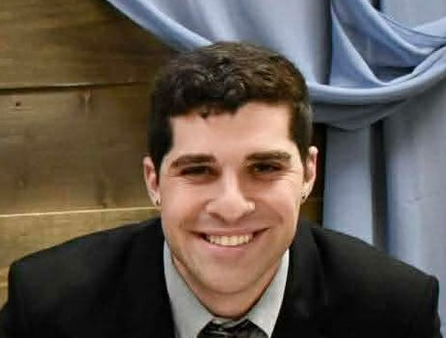
I’m Brian Bagrov, and I made Brian’s Blog to promulgate the culmination of what I’ve learned in my 27 years. My intent is to document my thoughts and findings for anyone who cares to listen.
Why Should We Listen to a 27-Year-Old?
image

I may, perhaps, potentially, possibly know more than the average 27-year-old, but that’s certainly not enough time to gain a lifetime of wisdom. Why listen to me?

Well, it’s not about listening to me. I’m not here to instruct you or to coach you. I’m not a guru or a charismatic leader of man. My goal is to learn, and I believe I’ve learned valuable lessons during my life. Some I’ve learned from first-hand experience and some by synthesizing second- and third-hand experience.

There is a ridiculous amount of information out there, and it is certainly overwhelming. It’s important to be open to learning and accepting new information without being inundated and paralyzed. This is where I may be able to help. I’m not telling you what I know; I endeavor to relate experience and knowledge in a digestible and applicable format. Knowledge is great, but what’s the point if you can’t use it? I like being able to apply knowledge in order to improve my life and the life of those around me.
My Background

Okay, now you know the basic premise of this website and how I view things. Who am I? What’s my background? What is the perspective that influences and informs my affect, behavior, and cognition?

I’m so glad you asked!

I was born in the state of Georgia in the United States of America. When I was quite young my family moved to the Pacific Northwest, and lived there for several years. After that, we relocated to Victoria in south-western Canada at the bottom of Vancouver Island, across from Seattle and Vancouver. Most of my childhood was spent here. When I was fifteen my parents, brother, and I moved to Prince George, the frigid “Northern Capital” of British Columbia, Canada.

All this moving around and living in the godless frozen tundra gave me a unique perspective, as most children are not so jostled about during their younger years. The first question I usually get is “Was your dad in the military?” Apart from his brief stint with the marines, in which they realized that he was mostly deaf and promptly kicked him out—no. My father was not in the military. Was he the reason for all the moving? Yes, he was. Why? Well, it’s easier to show you than to tell you. See if you can develop an understanding of the dynamic by using deductive reasoning from my blog posts (you can do it!).

I think I had a “normal” childhood, but that doesn’t mean much. From what I’ve gathered through the years, there is nothing particularly amazing about the way I was raised. I wasn’t locked in a dungeon, I didn’t invent any formulas, and I can’t see through walls. Instead, I went to school, played baseball, got the absolute excrement beaten out of me, did martial arts, ran track, got bullied a little, went through some awkward phases, played the drums, got into metal music, and grew into a full-fledged tax-paying adult without losing any limbs (thank God!).

In my early adult life I played a lot of music, met some good friends, moved to Tennessee, finally got myself a cute girlfriend yippee happy, had several jobs, and finally discovered what I wanted to do with my life. In my early twenties I became intensely fascinated with psychology—the way people think, act, feel, and believe, and why. I kept this career path in roughly the middle of my mind (not the forefront or the back).

At some point in my mid-twenties I had started attending personal counseling to work through some trauma and dysfunction in my life. One of the things that was weighing on me was my lack of vocational direction. After a couple sessions with a career counselor, I decided what I wanted to do. I wanted to become a research psychologist.

I promptly got my HiSet certification (a high school equivalency diploma) and enrolled at the local community college. At first, I decided to pursue a counseling degree so that I could practice without having to go through a doctoral program to be a clinical/research psychologist. “Oh well, this is the next best thing,” I thought.

I started classes and became locked into a routine. The more time I spent, the more I considered, and the more I studied and learned, the more I warmed up to being a counselor. Now, there’s nothing else I want to do. Being a research psychologist sounds very interesting, but also involves a lot of math (no thank you). You’re telling me I can implement psychological findings by applying them to my practice and help people turn their lives around? Yes, please!

I can think of nothing better (for me) than to have deep conversations with struggling people every day with the cumulative result being a positive shift in their life. I know what it’s like to struggle; for many years I suffered from depression. Not the kind where I couldn’t get out of bed and take a shower, but the kind that was serious enough for death to constantly be on my mind. I suffered. I don’t want anyone else to go through that. I, thankfully, worked through it with a lot of time and effort in conjunction with the help of friends, family, and licensed counselors. If I can save even one person from the needless suffering of depression, my life is worth living.
Where Are You Now?

I’m staying the course. I’m currently a junior psychology student at Tennessee Technological University in Cookeville. In four years untitled I’ll have graduated with an expensive piece of paper that gives me license to counsel people professionally. Until then, I spend my time reading, studying, going to the gym, playing games (hopefully not too much), working, and investing for the future. Of course, now I’m also a certified blogger®.

Stick with me and I promise that you will perhaps, potentially, possibly learn at least one thing at some point. I promise.

Who Is Brian? Read Post »

Blog
Scroll to Top